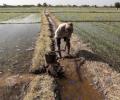
Gross Value Added (GVA) growth in agriculture and allied activities in the first quarter of the 2024-25 financial year (Q1FY25) dipped to 2.7 per cent at constant prices from 4.2 per cent in Q1FY24 due to a drop in output of some crops following heatwave in the main growing months. Low post-monsoon rains, which dried most of the reservoirs in several states across the country, also impacted the production of many crops. At current prices, the growth was estimated at 8.5 per cent as against 4.1 per cent in Q1FY24 due to a spike in food inflation during the April to June months of FY25.

International Monetary Fund (IMF) Deputy Managing Director (MD) Gita Gopinath has condemned the "terrible and disturbing" incident of rape and murder of a trainee doctor in Kolkata. "Personally, it is terrible to have any event of this kind. It is disturbing," she told Business Standard in New Delhi.

With cotton still figuring in the list of commodities that are produced using practices such as child labour, the Confederation of Indian Textile Industry (CITI) has entered into an understanding with the International Labour Organisation (ILO) to create awareness, share technical know-how and knowledge about better labour standards. These standards, which are part of ILO Fundamental Principles and Rights to Work (FPRW), will be tried on a pilot basis in major cotton-growing districts of Madhya Pradesh for one year starting in 2024.

'Given our turbulent neighbourhood, the prime minister is likely to emphasise on democratic dividend as the reason behind India's continuous prosperity.'
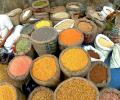
After climbing to the highest level in more than five years to 4.7 million tonnes in FY24, India might import fewer quantities of pulses this financial year at 4-4.5 mt on the back of good monsoon and higher domestic production, Bimal Kothari, chairman of India Pulses and Grains Association (IPGA), said in New Delhi on Friday. Kothari was addressing reporters on the sidelines of a seminar on pulses titled "Bharat Dalhan-2024".

In what could come as a piece of good news, hunger in India - as measured by the Prevalence of Undernourishment (PoU) by the United Nation's Food and Agriculture Organisation (FAO) - has come down from 16.6 per cent of the population in the 2020-2022 to 13.7 per cent in 2021-23, the latest report on the State of Food Security and Nutrition in the World (SOFI 2024) showed. This means that around 39.3 million people have come out of undernourishment between the two periods, NITI Aayog member Ramesh Chand said on Tuesday.

Several BJP-backed state governments have unveiled schemes targeting the poor, women, farmers and students, following the party's setback in the Lok Sabha polls.

Alloting more funds for MNREGA and PM-KISAN could wipe out the entire additional money that the Centre may have for FY25.

Milk supplies could improve with the monsoon, provided the rains are not excessive.

As a panel of senior ministers deliberates on the need to review curbs on exports of some rice varieties, data shows that since outbound shipments saw restrictions in July-August last year, the non-basmati segment has suffered more than basmati exports. Sources said the panel is expected to soon deliberate on a few suggestions to ease the export curbs on some rice varieties due to higher-than-required stocks in the central pool. The panel, some observers feel, may also postpone the decision to ease the export curbs till a firm picture emerges on the latest kharif paddy sowing.

Average monthly GST collection rose from Rs 90,000 crore during the first year of its implementation -- 2017-2018 -- to Rs 1.68 trillion during 2023-2024, representing an 87 per cent rise.

Adding petrol and diesel to GST was a challenging task due to their significant role as revenue generators for both the central and state governments.
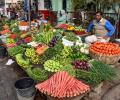
Increased production of pulses, oilseeds, and cereals will help boost domestic supplies and contribute to keeping inflation low in the coming months.
'The expeditious enactment of labour codes and strategic measures to bridge the skills jobs gap are critical.'

The Met department blamed the malfunctioning of sensors kept at the Automated Weather Station for the gaffe.

The rains after arriving over Kerala will quickly cover Tamil Nadu and Karnataka, but then might slacken a bit, which could delay its arrival over Northwest India.

High vegetable prices are expected to keep food inflation firm in the months to come.

'The prime minister's comment on 'revdi culture' was welcome. But I am disappointed he did not follow up on that.' 'All political parties, including the BJP, have been guilty of this.' 'Now, Modi's guarantees, the Congress's 'nyay' path and both ruling and Opposition parties are vying with each other for freebies in my home state Andhra Pradesh.'
Services provided by Indian information-technology (IT), marketing, and consulting companies to foreign clients may not always draw integrated goods and services tax (IGST) if a ruling by the Authority for Advance Rulings' (AAR's) Telangana Bench becomes a precedent. The AAR gave its ruling on a specific case of referral services provided by the Hyderabad-based Center for International Admission and Visas (CIAV) to foreign universities and colleges for admitting Indian students.

In a case related to Mumbai-based Jai Trust versus Union government, the court ruled that a gift is a consideration-less transaction, and hence, not liable for capital gains tax. It quashes the reassessment notice issued by the tax authorities alleging that a specific income has escaped assessment on transfer of shares as gift by the trust.
